Game Dev Tycoon
In "Game Development Nation," you take on the role of a national leader, aiming to become one of the world's most powerful countries by developing the economy, upgrading infrastructure, and strengthening military forces.
Game Info
- DeveloperKairosoft
Game Details
Game Dev Tycoon
Game Introduction
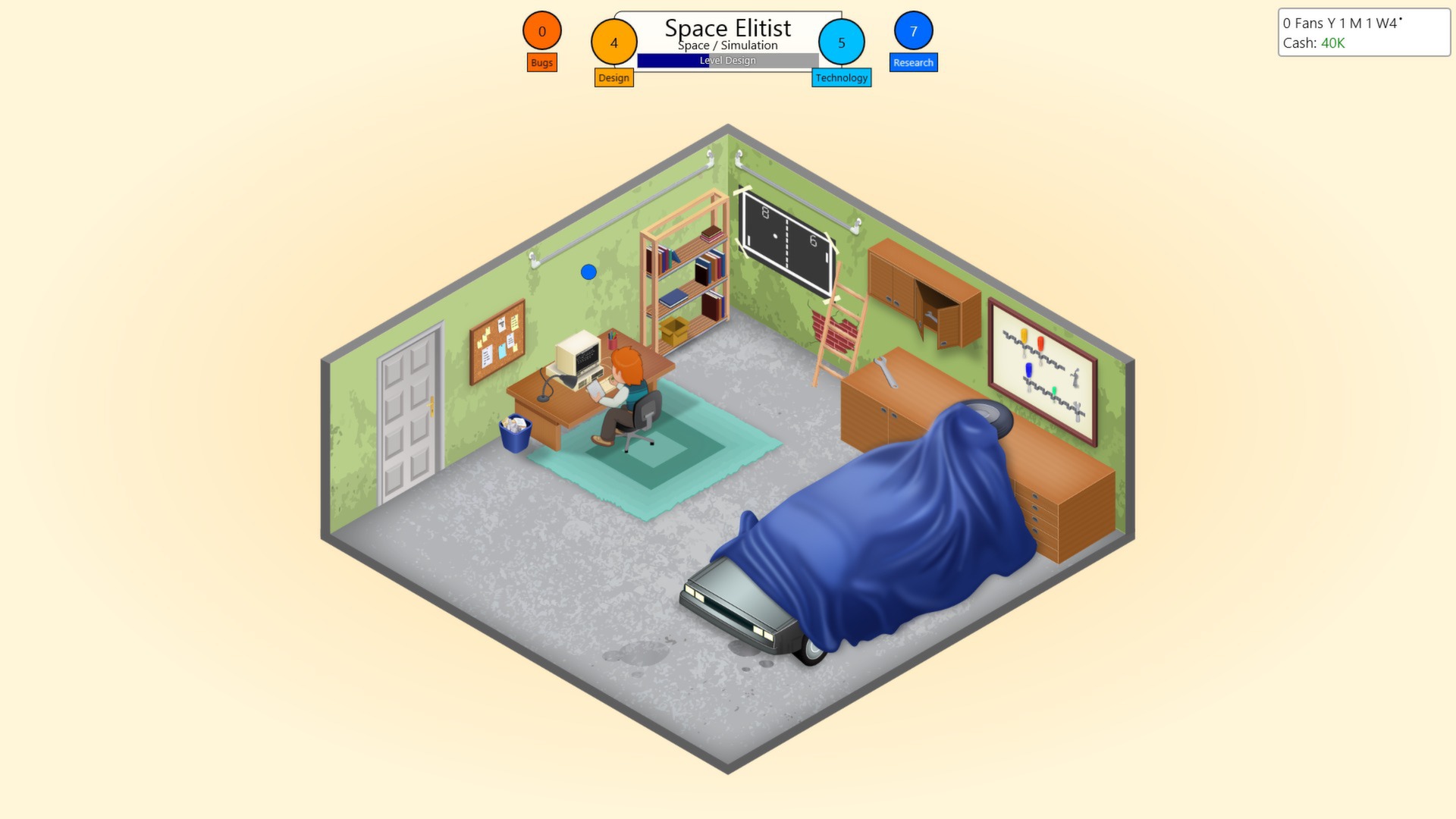
Game Dev Tycoon is a classic simulation management game developed by the German independent game studio Greenheart Games, officially released in 2013. The game allows players to assume the role of a young, aspiring game developer, starting from a small garage-based studio and gradually growing into a globally renowned giant in the gaming industry.
The game's timeline spans from the 8-bit era of the 1980s to the modern console era, allowing players to personally experience over three decades of the gaming industry's evolution. Featuring a retro pixel-art interface design and a smooth management system, the game offers a nostalgic yet challenging journey through game development.
Game Features
Authentic Game Development Simulation
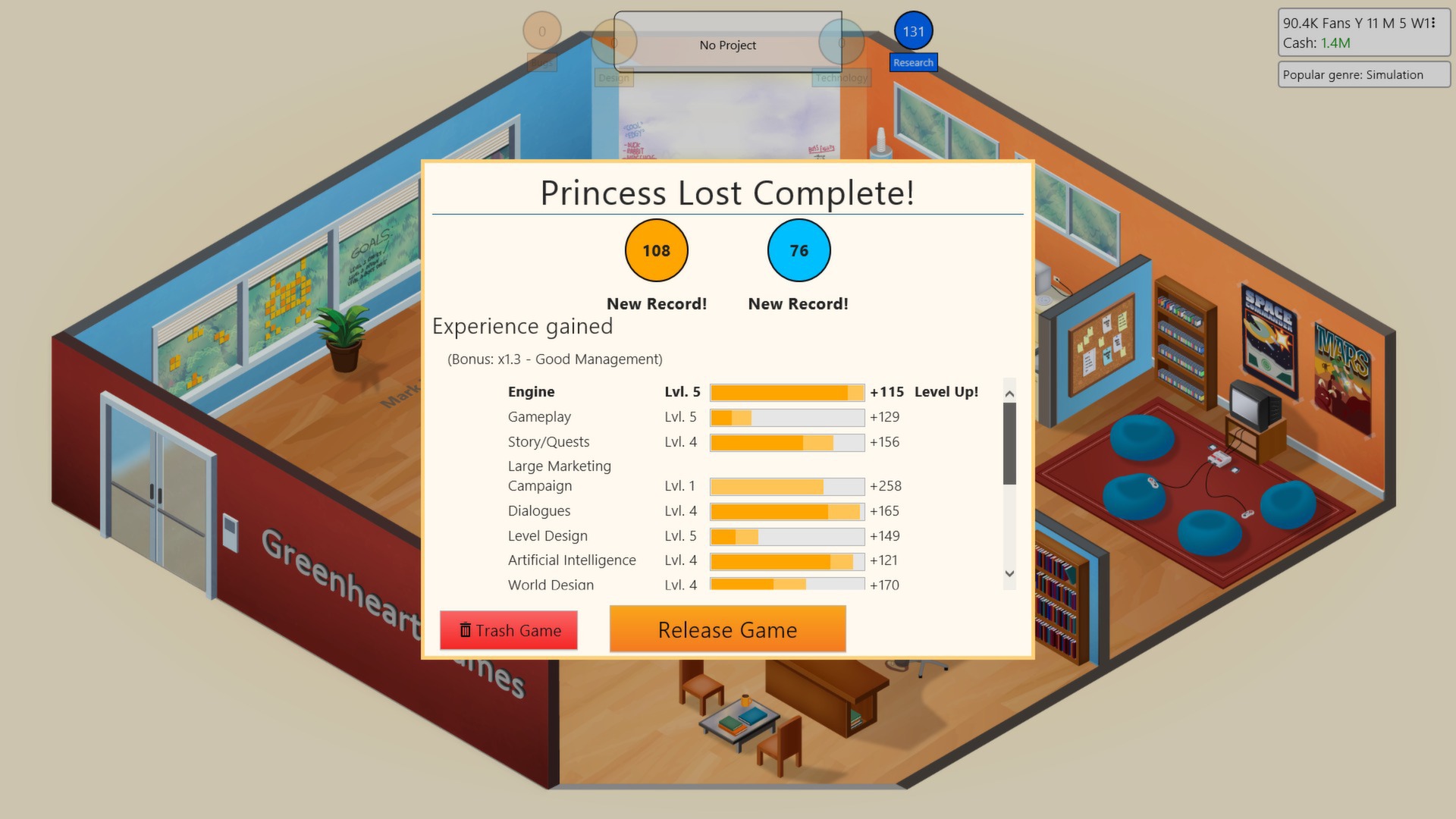
The game meticulously recreates various stages of real game development, from initial concept brainstorming and engine selection to gameplay design, technical research, quality testing, and final market release. Players must navigate every critical step, experiencing the complete workflow of a game developer.Era Evolution System
The game fully simulates the evolution of the gaming industry, from the 8-bit pixel games of the FC/NES era, through the 16-bit era of SFC/SNES, the 32-bit era of PS1/N64, and later the PS2/Xbox era. Different eras come with distinct technical limitations and market preferences, requiring players to stay ahead of the trends.Diverse Game Genre Combinations
The game includes multiple game genres (Action, Adventure, RPG, Strategy, Casual, etc.) and various platforms (PC, consoles, mobile devices, etc.). Different genre combinations elicit varied market responses, and players must experiment to discover the optimal mix.Employee Training and Development
As the company expands, players can recruit employees with different specialties, such as programmers, artists, and musicians. Each employee possesses unique skill levels and growth potential. Proper task allocation can significantly enhance development efficiency.Reputation and Review System
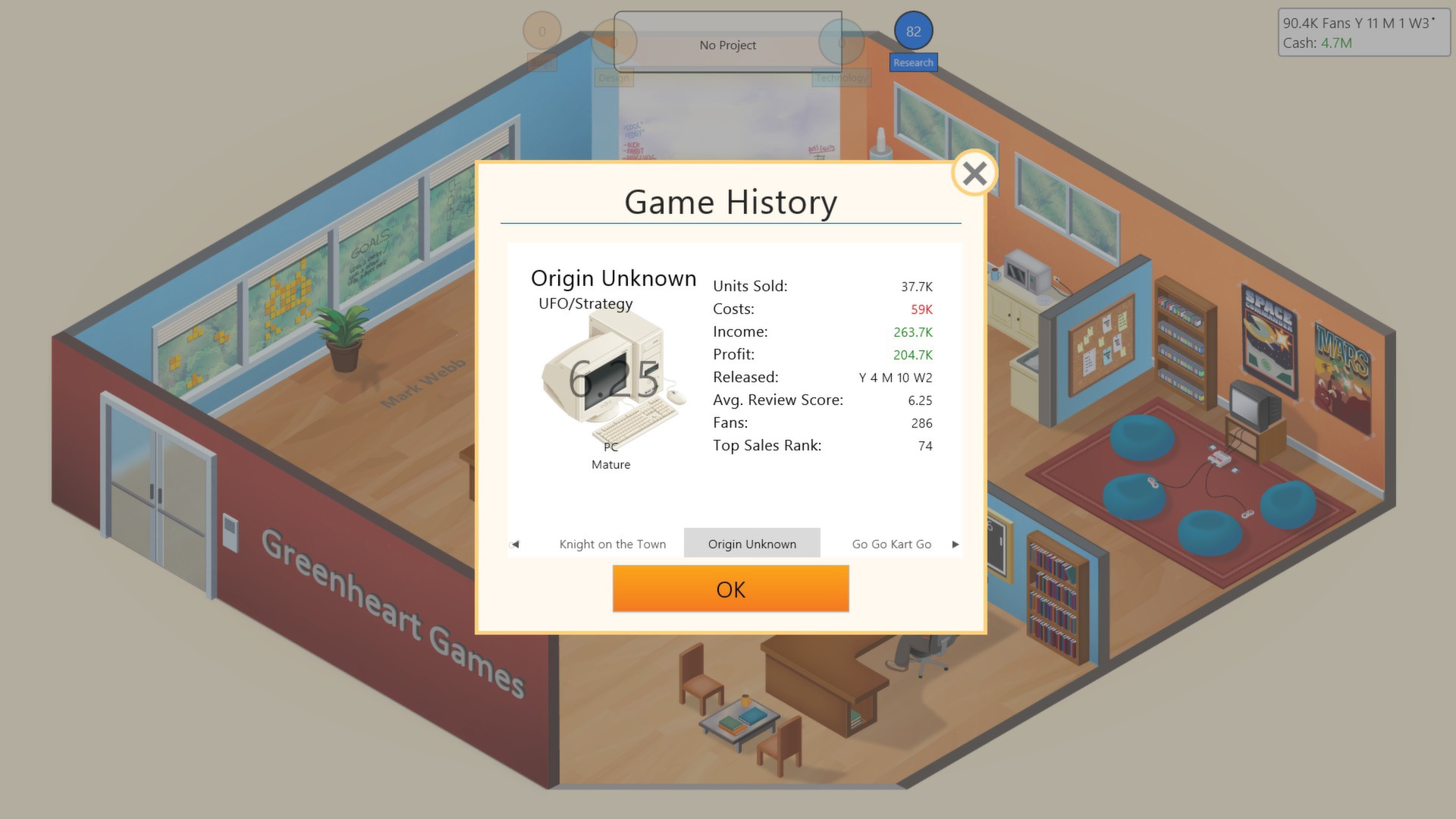
Every game developed by the player receives ratings from professional media and player feedback. Reputation accumulates over time, influencing the company's brand value and the market performance of subsequent games.Gameplay Mechanics
Basic Development Process
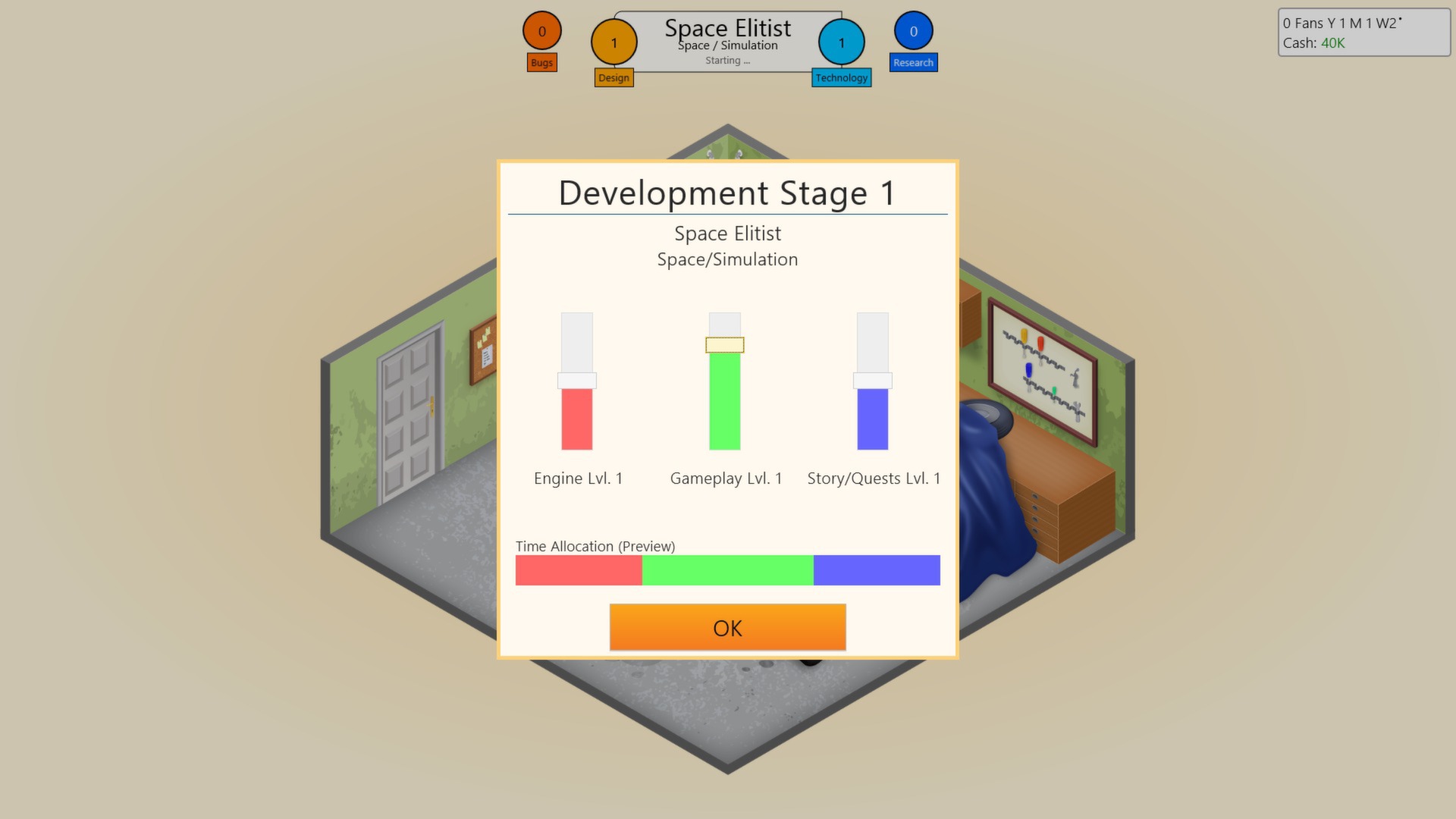
Players must first select the game's genre, target platform, and core technology, then allocate development time for production. During development, players must balance costs, time, and quality to avoid bugs from rushed work or financial shortages.Technology Research
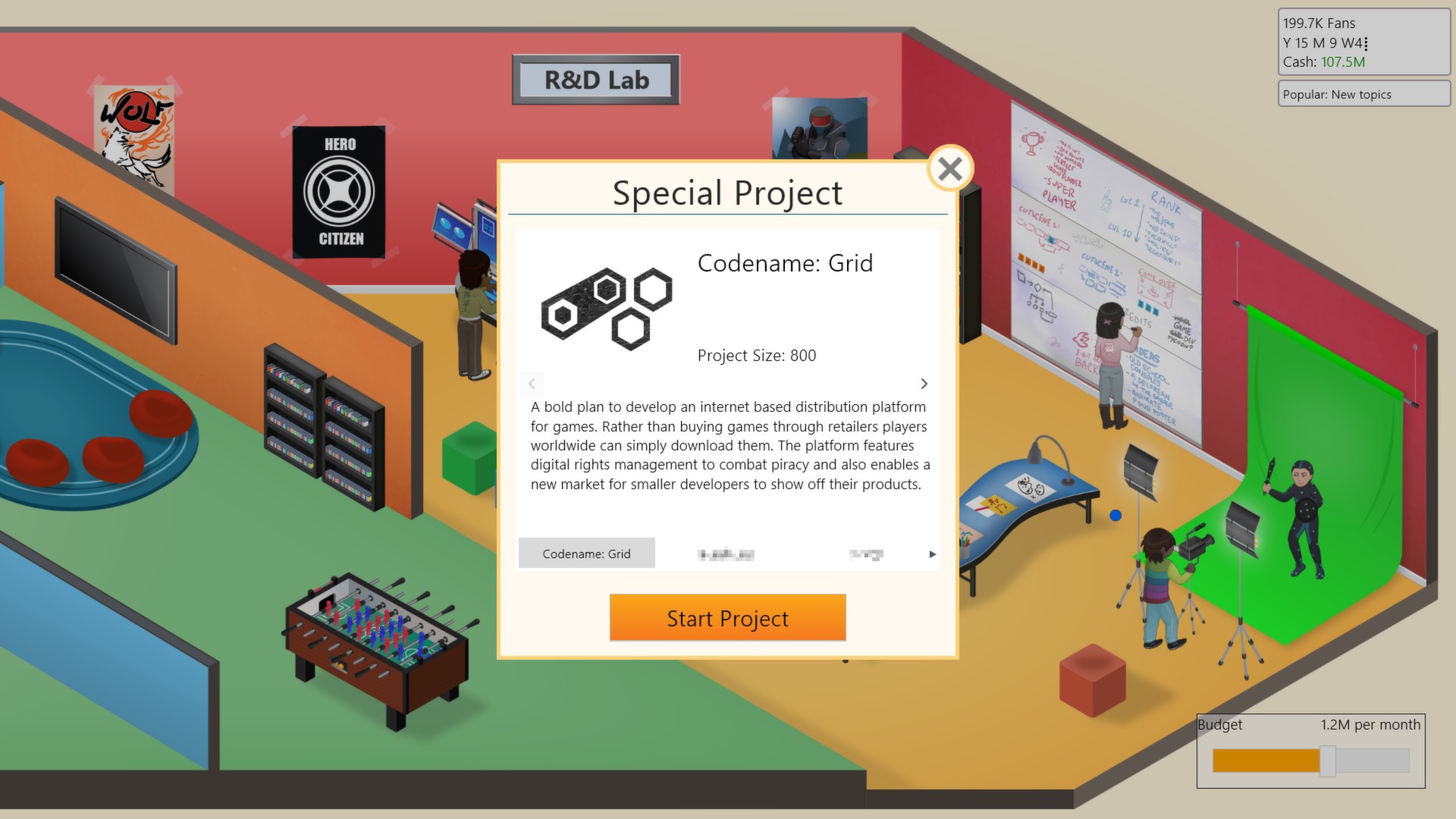
During idle periods, players can research new technologies to unlock more advanced game engines and development tools. Technological advancements can shorten development cycles, improve game quality, and even lead to innovative gameplay mechanics.Marketing Strategy
Before a game's release, players must devise marketing strategies and allocate appropriate advertising budgets. Marketing efforts must align with game quality; excellent games with proper marketing can yield substantial profits, whereas excessive marketing for mediocre games may backfire.Handling Competition and Market Changes
The game market features AI-controlled competitors who release similar games and vie for market share. Players must stay informed about market trends, analyze competitor strategies, and adjust their own development direction accordingly.Company Expansion
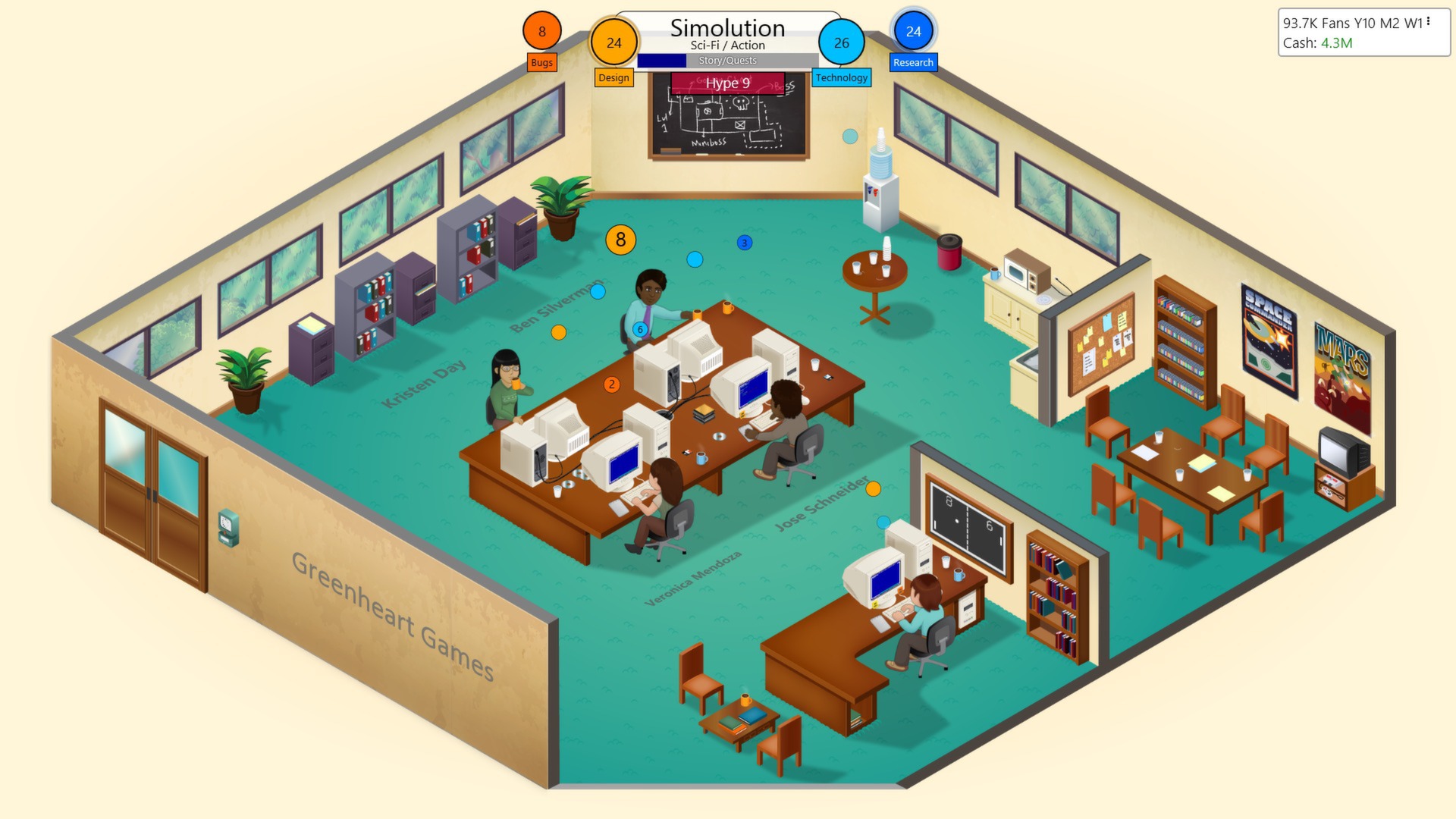
As funds accumulate and reputation grows, players can expand their offices, purchase better equipment, and recruit more staff. The goal is to gradually transform a small workshop into a large game company with a full-fledged R&D team, ultimately achieving the dream of becoming a legend in the gaming industry.
×
![Game Screenshots]()