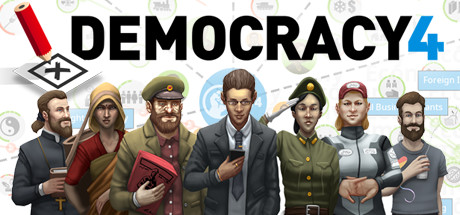

Democracy 4
Game Info
- DeveloperPositech Games
Game Details
Democracy 4
Game Introduction
Democracy 4 is a political simulation strategy game developed and published by Positech Games. Officially released on January 13, 2022, it is the fourth mainline installment in the classic political simulation game series "Democracy." The game entered Early Access on October 7, 2020, and after over a year of polishing by the development team, the full version was launched.
This title continues the series' classic political management simulation gameplay. Players assume the role of a nation's highest leader, tasked with balancing the interests of various factions within a complex political environment, formulating reasonable policies and regulations, managing the national budget, responding to various unexpected events, striving to maintain their position in power, and driving national development. The game is renowned for its deep policy simulation system and highly intricate political ecosystem, attracting a large number of players interested in political simulation themes.
Game Features
Deep Policy Simulation System
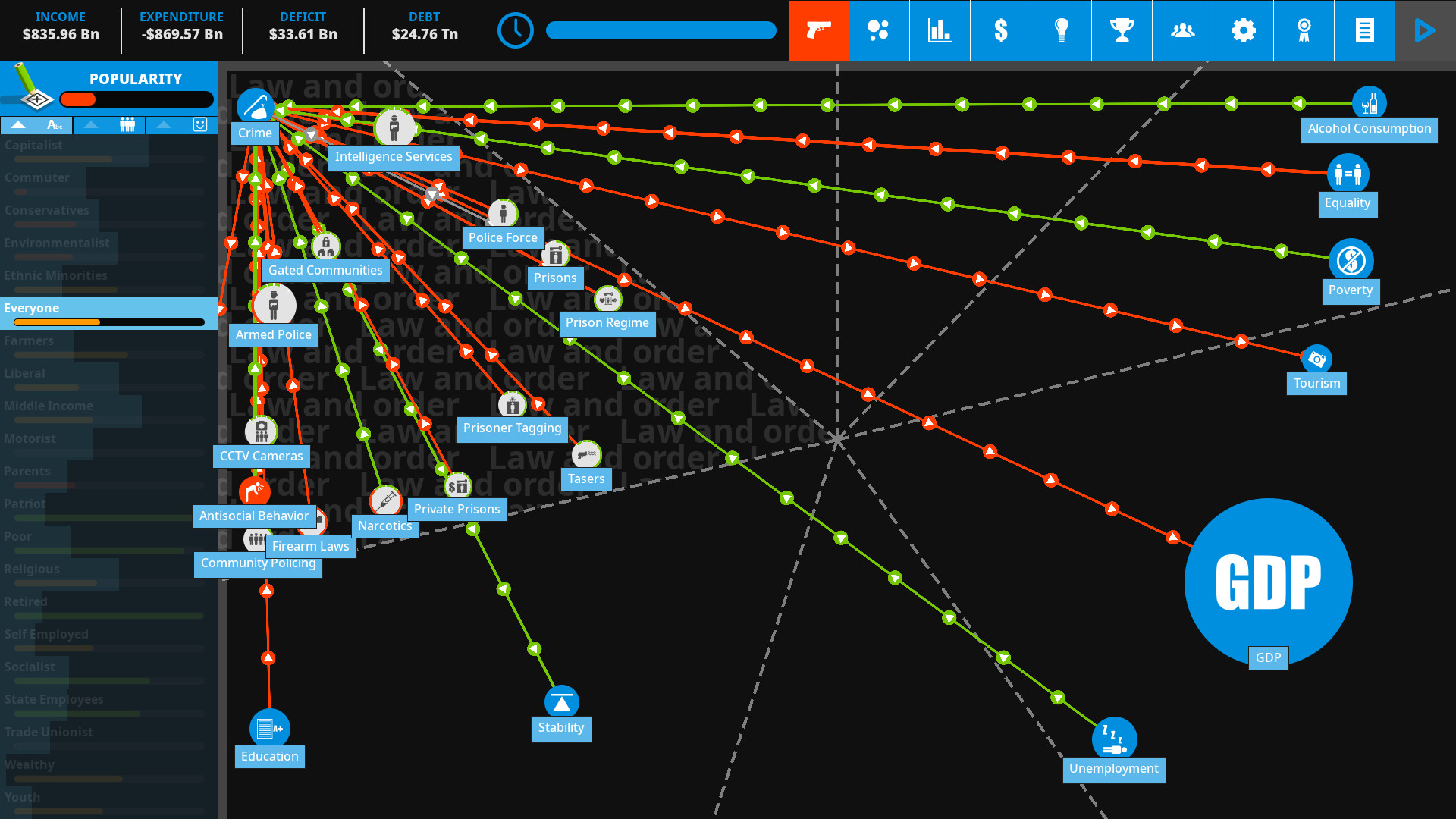
The game features an extremely detailed policy simulation engine covering nearly all areas of government function, including taxation, education, healthcare, welfare, military, diplomacy, and the environment. Adjusting any single policy creates a chain reaction, affecting multiple social indicators and voter satisfaction. Players must think holistically and understand the interrelationships between different policies.
Complex Voter Group System
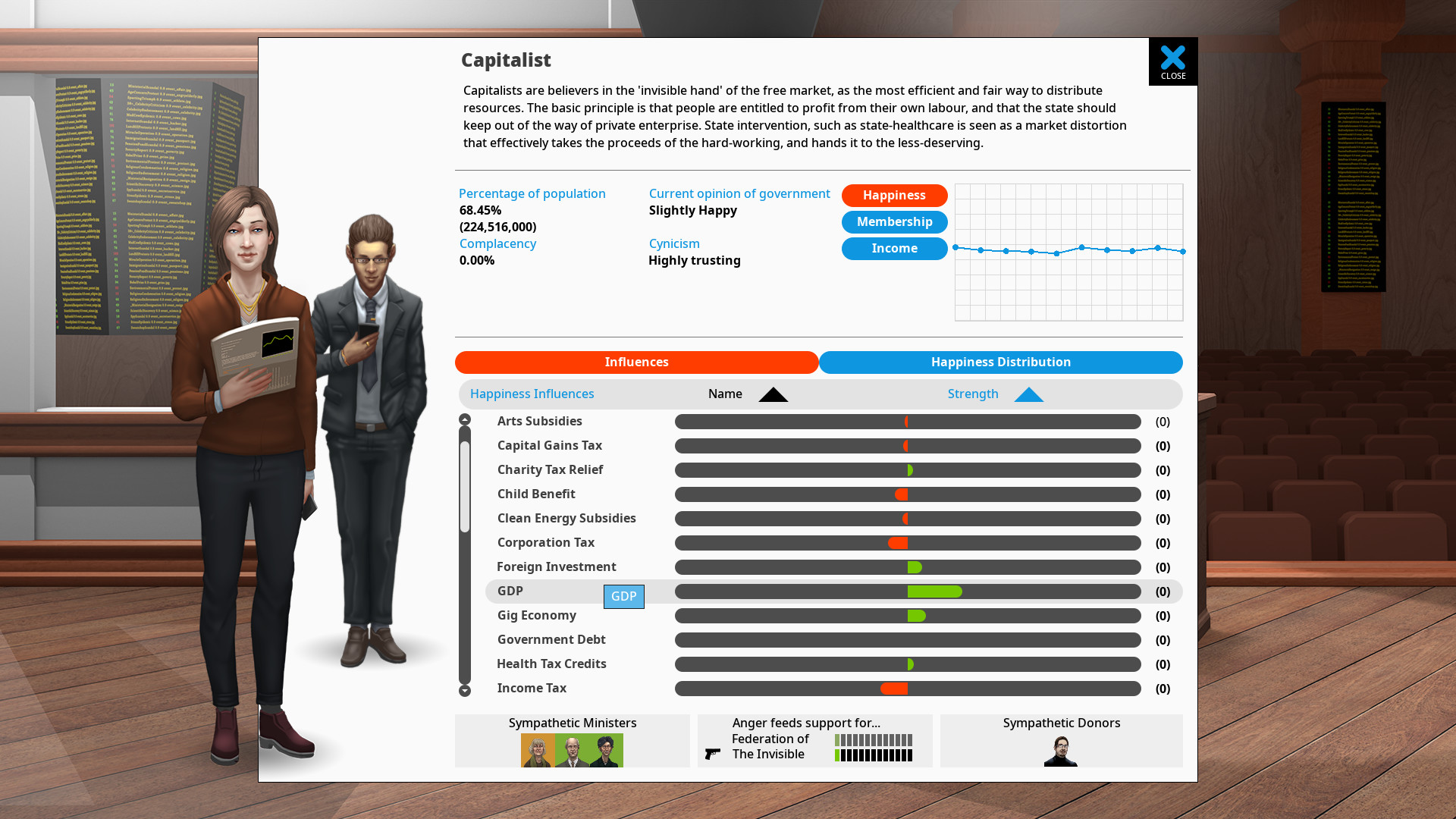
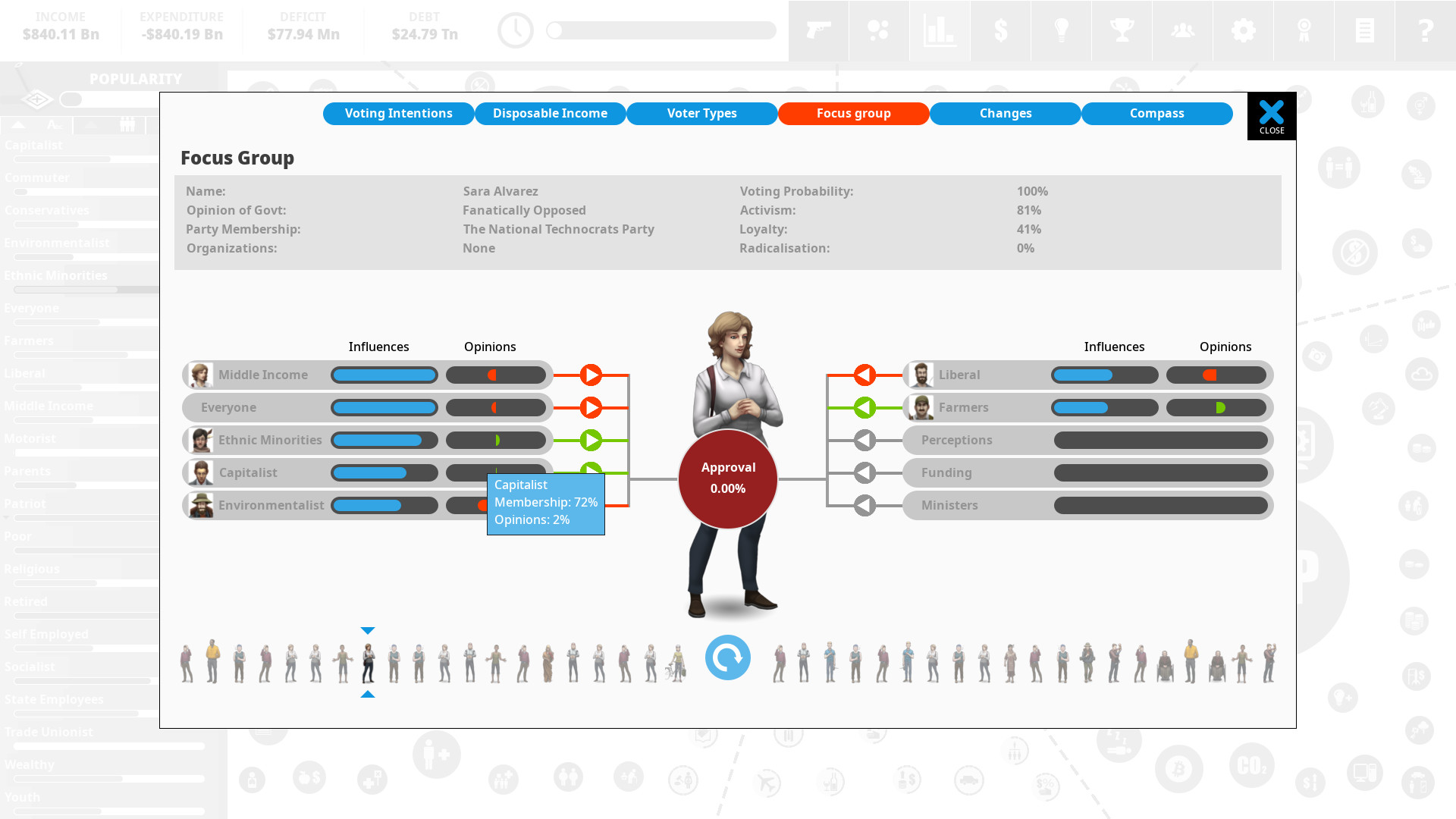
Society is divided into numerous voter groups, including but not limited to the working class, middle class, capitalists, retirees, youth, environmentalists, and business owners. Each group has its own demands and sensitivities regarding different policies. Players' policy choices directly impact the support rates of these various groups.
Dynamic Political Ecosystem
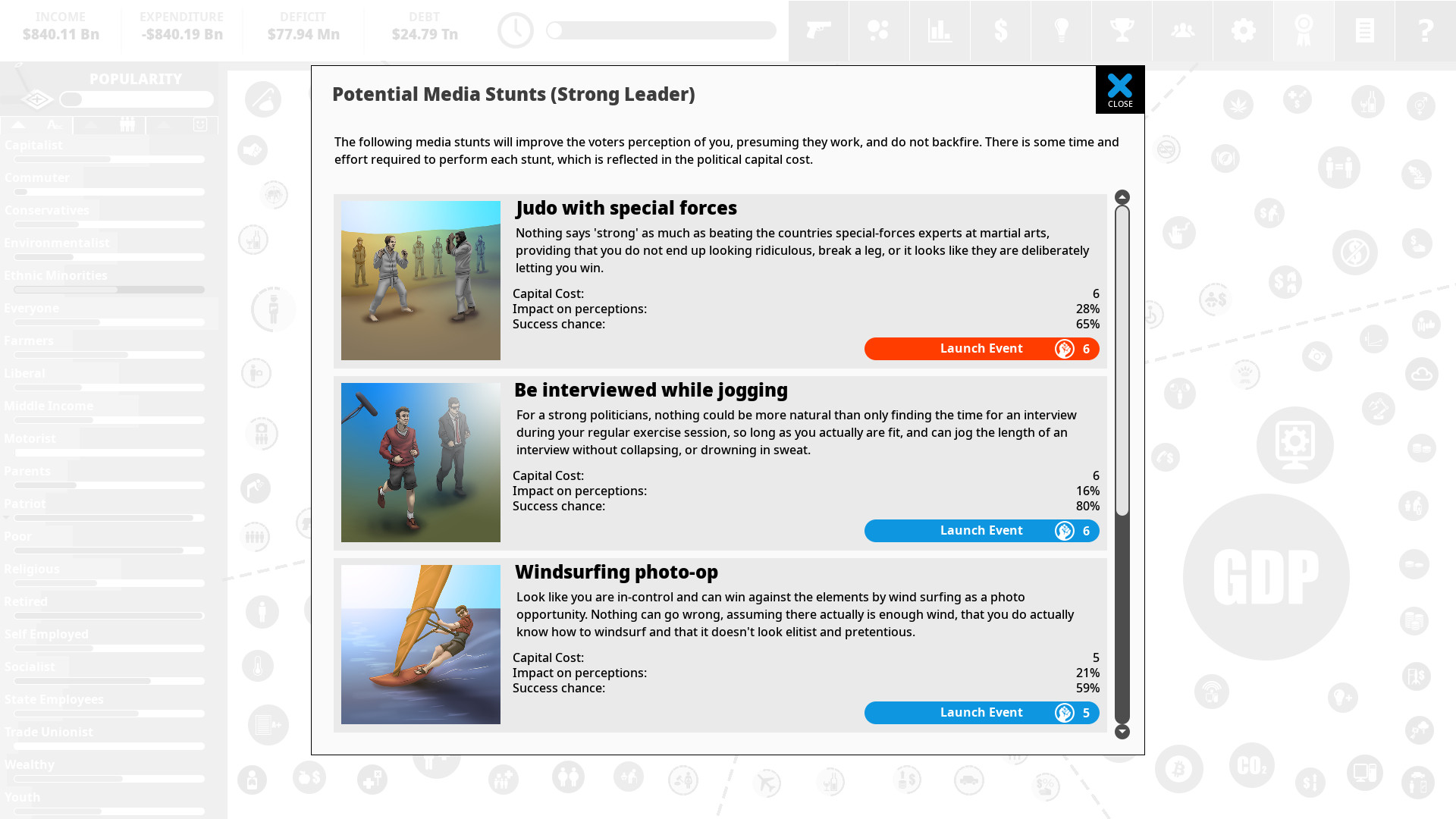
Party support rates fluctuate in real-time based on the effects of implemented policies. Players must constantly monitor shifts in public opinion and flexibly adjust their governing strategies. The game also simulates key elements of real-world politics, such as parliamentary maneuvering, interest group lobbying, and media influence.
Multi-Dimensional National Indicators
The game features numerous quantifiable indicators, including economic growth, inflation rate, unemployment rate, crime rate, environmental quality, education level, healthcare conditions, and happiness levels. Players must seek balance among multiple objectives to achieve comprehensive national development.
Extensive Policy Options
The game offers hundreds of adjustable policy parameters, ranging from personal income tax rates to minimum wage standards, from immigration policies to carbon taxes, and from education funding to military budgets. Players can perform fine-tuned adjustments on nearly every aspect of national governance.
Gameplay
Basic Management Interface
The main game interface is presented in an intuitive dashboard format. Players can view the status of the nation's core indicators in real-time, including key data such as GDP growth rate, unemployment rate, inflation level, and crime rate. Through this visual information, players can quickly grasp the state of the nation, identify problems promptly, and formulate response strategies.
Policy Formulation and Adjustment
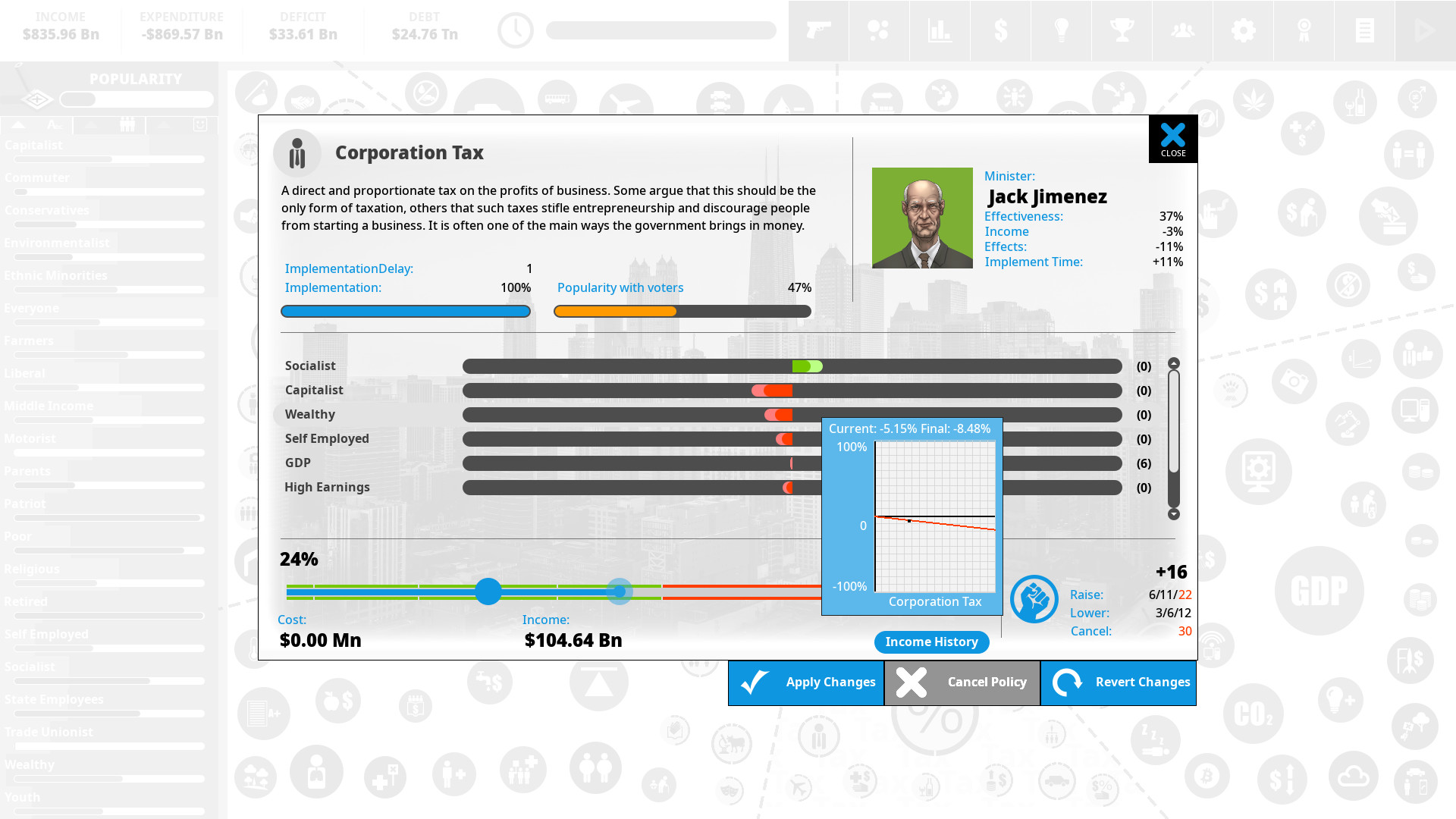
Players can modify various government policies through the policy menu. Each policy adjustment displays the estimated impact and potential chain reactions. The game encourages long-term planning, as the full effects of certain policies may take years to fully materialize.
Budget Management
Allocating the government budget rationally is one of the game's core challenges. Players must distribute limited fiscal resources among various sectors while maintaining a balanced budget, avoiding deficit crises or debt traps. Managing national debt, tax policies, and spending priorities all require careful planning.
Responding to Unexpected Events
Various random political events and crises occur in the game, such as economic recessions, disease outbreaks, social unrest, and diplomatic conflicts. Players must make quick decisions, often facing choices without perfect solutions, requiring trade-offs after weighing the pros and cons.
Winning Elections
The game progresses in political cycles. Players must campaign for re-election in each electoral cycle. The key to securing re-election lies in improving the nation's overall well-being, meeting the demands of key voter groups, and skillfully handling various crises to build a strong track record.